
Pay and Chief Investment Officers: Good Money while It Lasts
by charles | Comments are closed06/20/2020

In this letter, we highlight the compensation of one hundred chief investment officers at US university endowments.
Endowment investment chiefs are the ultimate long-term, strategic investors.
They have an infinite investment horizon, a global playing field, and can invest in anything anywhere – within the broad policy limits set by their institution.
Their performance is a bellwether for what’s prudent and possible.
We recruit these executives for a living and avidly follow all institutional investment heads managing assets over $1 billion (and many with less), tracking their performance and pay, and scrutinizing their abilities.
Foundations, family offices, and Wall Street firms also employ top investment professionals, but it’s difficult to extract meaningful data on compensation or performance from opaque sources. So, we go with what we can get.
When it comes to pay, size matters
Nonprofit investors wear many hats but have essentially one metric by which they are judged; long-term performance. However, that does not seem to be the metric for how they are paid.
We ran some correlations using our archival data-sets to see how pay correlates to AUM, tenure, and five-year performance.
As shown below, the correlation coefficient for AUM to comp is 0.69, which is moderately high. But, tenure and performance don’t appear to have much impact on CIO pay.
There are some outliers, like Paula Volent at Bowdoin, a consistent top performer and deservedly well paid, managing an endowment with less than $2bn AUM. But, in most cases, size trumps all other metrics.
Comp-vs- AUM: 0.69
Comp-vs-Tenure: 0.31
Comp-vs-5yr Rtn: 0.27
In the larger corporate world CEO pay is an object of great interest and controversy for obvious reasons. But the relationship of size to compensation looks just like what we see in our set of endowment CIO data.
Kevin Hallock at Cornell University is one of the go-to experts in this field. He’s chair of their department of Labor Economics and director of their Institute for Compensation Studies. In papers with his students and colleagues he’s studied CEO pay for many years.
He says: It doesn’t matter whether company size is measured as assets, market value, sales revenue or number of employees — bigger firms pay more … way more.”
“We can isolate the impact of all kinds of other characteristics (e.g., industry, return on assets, profitability, research and development expense, etc.) and even use complicated statistical techniques to remove the influence of “unmeasurable” characteristics, and the size-to-pay link remains intact.
The bottom line. Be it Wall Street, Main Street or nonprofit institutions – the bigger the assets, the better your chances at making more money.
It’s that simple.
And now, on with the show
Read More »The OCIO Dilemma: Buy, Sell, or Merge
by charles | Comments are closed05/21/2020

Active management is feeling more love these days. With the surge in institutions looking for investment help, there is new-found affection for the experience, judgement, and human touch provided by outsourced CIO firms.
But with opportunity pounding on the door, why do so few OCIOs hunger for growth? Where’s that entrepreneurial drive, that vision, passion, and focus on becoming the biggest and the best?
We have been tracking the industry for decades and have yet to see a single independent OCIO provider break through the one-hundred billion AUM level. Not one. Most will never reach twenty billion.
The OCIO business, as defined by Commonfund is…the practice of delegating a significant portion of the investment office function to a third-party provider, typically an investment management or consulting firm.
The industry, with $2.38 trillion in assets as of our latest report, is bifurcated, highly diverse, intensely competitive, and the largest six providers on our annual OCIO list – Aon, Blackrock, Goldman Sachs, Mercer, Russell and Willis Towers Watson – with their size and resources dominate the largest segment, corporate pensions.
In this segment, reality bites. There are only about three-hundred remaining internally managed corporate pensions over a billion AUM and those that outsource will chose one of the big six mentioned above or a major insurance company. Boutique OCIOs have no chance for the business.
Most new prospects dwell in the sub-$1 billion realm – endowments, foundations, health systems, charities, and associations – and smaller sub-$200 million customers including ultra-high-net-worth families and nonprofits.
The good news is that there are about fifteen hundred colleges and universities in the US (about one-hundred-fifty endowments over $1 billion and another one-hundred-fifty in the $500 million to $1 billion bracket) and several thousand foundations, health systems, charities, and associations.
The bad news is that most of the eighty-three firms on our list compete in this space along-side RIAs, brokers, and advisors. Literally hundreds of rivals.
Most of these competitors would be better off buying, selling, or merging with other providers instead of grinding away with little gain.
Here’s why.
Read More »The OCIO Industry: Alan Biller, An Accidental Money Manager
by charles | Comments are closed02/25/2020
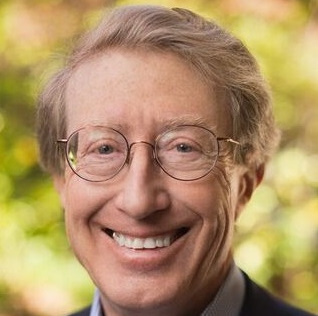
Alan Biller and Associates – one of the largest independent OCIO firms on our latest OCIO list – announced the hire of John D. Skjervem as their new chief executive officer and we are pleased that Charles Skorina & Co was able to assist with the search.
Mr. Skjervem, currently chief investment officer at the mighty $111 billion investment division of the Oregon State Treasury, will be joining ABA in Menlo Park in early April.
A University of Chicago MBA, Mr. Skjervem joined the Oregon Treasury in 2012 after twenty-one years at Northern Trust, most recently as CIO for NT’s $180 billion wealth-management unit.
The OCIO Industry and Taft-Hartley Pension Plans
As we noted in our 2019 OCIO (Outsourced Chief Investment Officer) report, the largest firms, including stand-alones like Alan Biller and Hirtle Callaghan as well as majors like Goldman Sachs and Mercer, continue to hire top talent and build infrastructure as the market grows.
By our bottom-up reckoning, discretionary assets rose from $1.98 trillion in the middle of 2018 to $2.38 trillion at June of 2019, a very impressive year-over-year growth rate of 19 percent!
ABA specializes in a sub-set of the OCIO matrix: the pension plans known as Taft-Hartleys (aka, “multiemployer,” or just “union plans).”
These are not as well covered by the broader investment industry as, say, the endowment and foundation sector, but they are at the heart of ABA’s success.
Read More »All-Weather Investment Leaders: We Need Them Now!
by charles | Comments are closed02/10/2020

We’ve had a remarkable run in the institutional asset-management biz. Good enough to camouflage a lot of mismanagement and sub-optimal decisions.
But we all know that there is trouble ahead and that sooner or later there’s going to be a reckoning.
When things fall apart again, will your foundation or family office be managed by experienced, agile leaders who can cope? Will they keep cool heads when others are losing theirs?
A few years ago an endowment CIO told me: “The board hired us [investment staff] after the 2008 crash because they realized that they never fully understood what they had in their portfolio and there was no one on the inside who could expose and explain the risks.”
“The consultants at the time met with the board once a quarter and kept telling the trustees that everything was fine until our portfolio fell off a cliff.”
The Reckoning
Are there new bubbles about to burst? Here are two possibilities; the unprecedented growth in index vehicles, and the stampede into private equity funds.
The Wall Street Journal reported late last year that the value of US index equity funds had just surpassed US actively managed funds by $4.27 trillion to $4.25 trillion. The Investment Company Institute disputes the Morningstar data, but the growth and appeal of indexing is undeniable.
Who can resist the allure of cheap and easy index funds and ETFs? From 2009 to 2019 the S&P returned a beguiling 11.27 percent annualized, excluding dividend reinvest, and indexers could do no wrong.
Unfortunately, bull markets breed short memories. Few recall that in the prior decade from 1998 to 2009, the S&P actually lost money, delivering a negative 2.72 percent. (Falling a calamitous 55 percent in the final two years, September 2007 to March 2009.)
As for private equity, PitchBook Data calculates that over the last ten years more than three trillion dollars has flowed into private equity and venture capital funds worldwide.
This despite the fact that since 2005, the returns from these illiquid funds have been little better than liquid public market performance.
Some of the best investors in the business have taken notice and are preparing for the possibility of a collapse.
Read More »A Dazzling Decade with Trouble Ahead
by charles | Comments are closed12/12/2019

It’s hard to make predictions – especially about the future.
—Robert Storm Petersen, Danish cartoonist, writer, humorist
London calling
Reporter Chris Flood at the Financial Times ran an article a few weeks ago that parsed our latest endowment performance report and pounced on the fact that that none of the sixty funds we featured performed as well as Vanguard’s VFIAX, a large-cap U.S. equity fund, over the last 10 years.
Our newsletter gave an early peek at endowment investment performance for fiscal 2019, including a ranking by 10-year returns.
The VFIAX returned 14.7 percent net of fees for the decade while the top 10-year endowment investor on our list was Paula Volent at Bowdoin College, who racked up an excellent 12.0 percent.
Mr. Flood’s observation makes a good story-hook but, comparing diversified endowment or foundation portfolios to the VFIAX – or to any similar pure-play equity index makes little sense in the real world.
Retrospectively (looking backwards from 2019), placing all your chips on a cheap equity-only index fund looks like genius, but prospectively (forwards from 2009) it would have been insane for any prudent institutional investor.
Endowments and foundations are long-term global investors with horizons extending out fifty, a hundred years and more, and the trustees and CIOs build portfolios to last for generations.
The job of CIO at an endowment or any financial institution is not to beat the VFIAX, but to meet the objectives set by the board who view capital preservation and steady cash flows as paramount.
The sages speak: Omaha vs. New Haven
In our letter we quoted an anonymous board member who was ready to throw up his hands and index his institution’s endowment, thereby avoiding a lot of fees.
We know this board chair and he’s an able and experienced financial exec.
But some bigger and more eminent investors have also taken positions both for and against a passive strategy.
Read More »